As part of Daisarella’s dementia focus week, we are giving two people the opportunity to get their hands on Dr Esther Ramsay-Jones new book ‘Holding Time: Human need and relationships in dementia care’.
Esther is a psychodynamic psychotherapist and university lecturer on death, dying and bereavement. The book increases recognition of the importance and value of relationship centred care in this field. Written ethnographically, it unfolds as a narrative and also includes the real words of staff and residents from the care homes in which the author conducted observations.
Holding Time explores how the relational investment in care is vital alongside a technical one. The book details the micro-interactions of everyday care, concern and play before moving out to a wider, organisational and macro stage. It addresses our fears about dependency on a societal level, and attempts to challenge the foregrounding of the independent, rational individual over all other experiences. It demonstrates that in good care, we find a means of relating that counters the push for rampant individualism and undervalues human need.
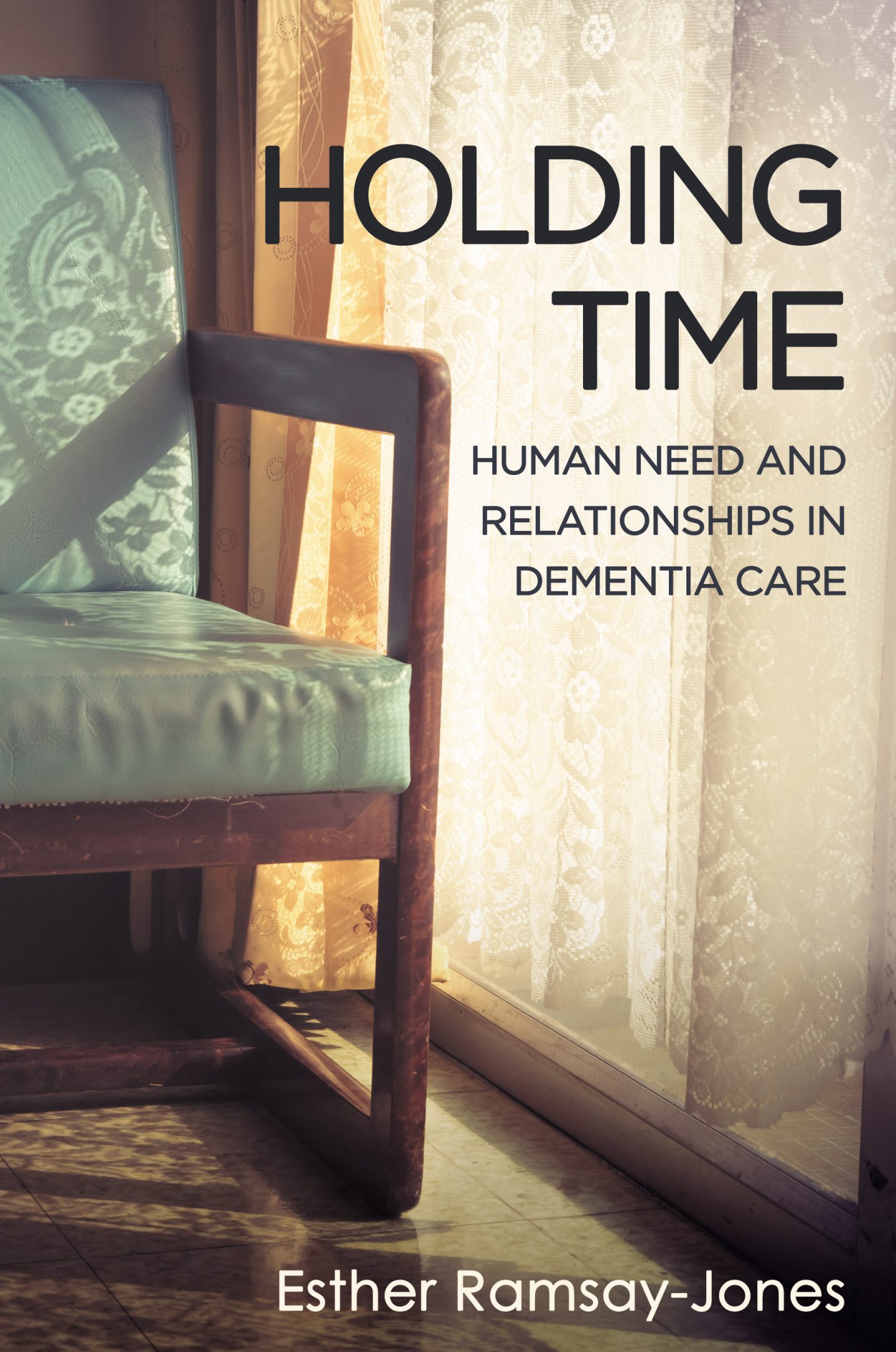
Written from first-hand personal and professional experience of dementia, and long-term conditions, Holding Time is a contemporary exploration of the dementia care field, and contributes to the general movement to improve care of those living (and working) with dementia.
I got the opportunity to speak to Dr Esther about the book, palliative care and her top tips for those who care or love somebody who is suffering with dementia.
- What made you want to become a psychotherapist in palliative care?
In some ways becoming a psychotherapist in palliative care was a natural progression from working in frontline dementia care: people I had worked with, and cared for, had died in care homes and it was very hard to say goodbye to people you were attached to. My interest in death and dying started before this, though, as I had read and studied some philosophers, who talked about using the knowledge that we would all one day die in the service of creating meaningful lives in the here and now. What I do know is that it is a privilege to work with terminally ill people and their families – very often they share their life’s lessons, which can be an honour to hear.
- If you had to summarise dementia to somebody who had never seen somebody go through it what would you say?
Dementia is an umbrella term used to describe a vast number – over 200 subtypes – of progressive neurological conditions that are characterised by memory loss, cognitive difficulties and eventually changes to the personality and mobility. People living with dementia can become anxious because of these changes, and also angry when communication becomes harder. It is very frustrating not to be understood and to struggle to make feelings known. For carers of people with dementia, of which there are 700,000 currently in the UK, this can be an isolating and exhausting experience, and is very sad when you might feel that the person you have known for many years no longer recognises you. It’s important to take rest and to look for support, possibly with local Age UK memory groups or the Alzheimer’s Society. The Admiral Nurse, service funded by Dementia UK, is also invaluable for support and information.
- My grandfather and great nan both have dementia and to watch them so rapidly decline is unbelievably sad. How do you think it is best to treat that person who is going through dementia?
It is really difficult to know how best to respond to someone who is living with dementia, and to make a generalised statement about this, as everyone with dementia is unique. We all have different family backgrounds, histories, roles and so forth. Also some people living with dementia are young – ie, under the age of 65 – and so different issues might come in to play in terms of worrying about work and finances; and mourning a future that may not materialise. Generally speaking, though, it is important to be as patient as possible and to slow down, trying to be alongside someone at their speed. If we highlight a person’s memory loss it might lead to the person with dementia feeling inadequate, which in turn might lead to increased sadness or anger. Someone might withdraw as he or she feels criticised. It’s important to notice someone’s capabilities, and to remember that the person with dementia is undergoing many losses. It’s vital to try to be sensitive, although in a long-term marriage, it is invariable that the residual dynamics, and niggles, between couples, will resurface so it’s about being aware of what triggers tension each day. Sometimes the carer will also need help and, importantly, to get a break to refuel. Music can be a lovely way to reconnect with someone with dementia: the charity, Playlist for Life, is a really good source.
- What are your best tips on caring for somebody with dementia?
First off, try to continue to see the person first; not the dementia. Despite the changes that are taking place, someone with dementia is human and so, like the rest of us, is full of feeling. People with dementia still remain intuitively attuned to the people in their lives and to the environment: effectively, try to respond with empathy. Also people in the early stages will still be very able so it is important to respect that person’s agency and choices. (It’s really worth reading Wendy Mitchell’s Somebody I used to Know, who writes about her experience of dementia: a very moving account.) But fundamentally listen and notice: what is somebody trying to tell you. Beyond that, people can live with dementia for many years and so, though there will be sad, difficult times, there will still be possibilities for enjoyment and pleasure. There’s a lot to be said for humour and playful moments, so draw on those moments and notice when you have had a good time to keep some sense of balance. That said, it can be hard to care for someone with dementia, so as a carer you have to learn to ask for help. This is not a failing – we all need help sometimes and it is very tough to look after someone when you yourself are struggling. Dementia Carers Count is a good place to go for advice. We know that people with dementia can become even more attached to wives, husbands, daughters, owing to heightened anxiety, and will often find it tricky to let them go out. It’s about managing departures sensitively and making sure that there is good alternative care provision available if needs be.
- How do you maintain a relationship if someone has dementia?
Though you might think that someone with dementia – particularly in the later stages – has forgotten who you are, perhaps because your name has been forgotten, this is unlikely. There will always be emotional memory – if not factual memory – and so being yourself and expressing your love for someone will not go unnoticed. Even if someone becomes unable to find words, and to speak, we can always connect with other people through eye contact, touch, song, sharing memories through photographs or finding a way in by talking about objects from the past. Someone with dementia might go back into an earlier period of their own history – try not to correct him or her but explore the past and the memories: reminiscence is one very lovely, validating way, to reconnect and to relate.
- Where does your passion stem from? Have you ever experienced dementia close to home or personally?
Really I think my passion for supporting people with dementia, and their families, came from our family’s experience with my grandmother who died from Alzheimer’s disease 3 weeks before her 100th birthday. She was a very vibrant woman, and though she did become very anxious at times, she had a lot of support from friends and family. It was clear – she even moved into my mum and dad’s home with my other grandmother – that relationships made a huge difference to her; and even in a care home she was lucky to have very good care workers around her. More recently, my mother died of brain cancer – which has some crossovers with dementia: her memory started to decline and eventually she found it hard to communicate with words. It was very painful to see her change like this, having been a real chatterbox and an English teacher, but again relationships with people who were able to slow down and meet her on her level made a real difference, as tough as that might have been for us all.
a Rafflecopter giveawayTerms and conditions: UK residents only. There are only two winners and they will each receive one paperback copy. All data is protected via Rafflecopter. Daisarella.com will only email the winners to confirm they have won. Upon notification of this as long as the winners are happy for me to pass their email onto the company who are providing the prize, then I shall pass their data on for just this reason. Once the prize has been sent out the data will then be destroyed. This competition closes on 16th October 2019. Good luck!
Leave a Reply